

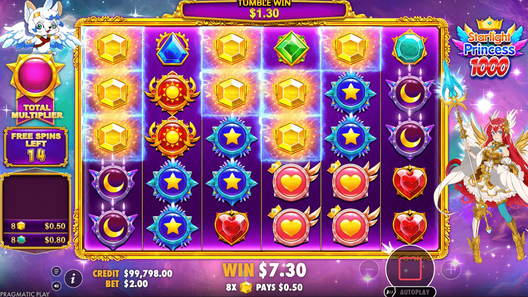






Demo Slot Starlight Princess 1000 In France
Test the game in trial mode, explore rules and sensations, then play in France with limits, breaks, and a clear budget.
Why Princess Starlight 1000 Demo Is Seductive In France
The trial mode has a simple advantage: it lets you understand the game without pressure. Imagine you come across a theme you like but you hate surprises. You launch a few spins in simulation, observe the rhythm, then calmly decide if it's worth a real session. Two minutes are enough to avoid an hour of hesitation.
What often attracts is the mix of fast sensations and easy readability. You quickly spot where the bet is, how a special feature is triggered, and especially if the animation suits you on mobile as well as on computer. True comfort is not constant excitement, it's the ability to follow what's happening without getting lost.
In France, access to this type of platform must remain within the framework of applicable rules and be reserved for adults. In practice, this means one very concrete thing: you prepare your session before playing. Time limit, closed budget, and a break as soon as your mood changes. The trial mode is precisely for establishing these habits before putting money in.
A final point that players underestimate: compatibility with your playing style. Some prefer a short session, others like to explore features in depth. With simulation, you can test both approaches and see which one keeps you most serene, without negotiating with yourself at each decision.
All promotional incentive structure is clearly stated in writing and/or via electronic means in an easily understood manner. All codes are accompanied by an explanation of what the code is for, who is eligible to use the code, and how it should be used. As such, players are less likely to be confused about what is required of them in order to receive a reward and how the reward will be applied after receiving it. The promotional incentives provided to participants provide them with time to become familiar with the gaming system's mechanics, their interface, and progress, before deciding how deeply they wish to become involved with this platform. Therefore, players are encouraged to participate in an informed manner, rather than being pressured or tempted to act quickly.
Starlight Princess 1000 Demo Slot: How to Test Without Making Mistakes
The most common trap is to confuse “trying” with “chaining”. Imagine you just wanted to understand the game, but you stay because “it's bound to happen eventually”. You're already playing for an expectation, not for discovery. The test becomes a mini-emotional session, and you lose the interest of the free mode.
The simple method: you set a test objective. For example: identify the perceived volatility, understand the interface, and check if you can follow the effects without fatigue. You do a few short sequences, take a break, then mentally note three impressions: readability, rhythm, and desire to replay. That's enough to decide.
Understand Free Mode Before Betting
Before switching to real money, you need to know what the simulation teaches you - and what it doesn't. Imagine you see a spectacular sequence during the trial. You might think this scenario will repeat quickly, while chance remains chance. The trial is for understanding the mechanics, not for predicting a session.
What you really learn: the pace, the clarity of the rules, how the game signals an event, and your own reaction. Do you stay calm when it slows down? Do you speed up when you're bored? This is valuable information, because it concerns your behavior.
What you don't learn: the “promise” of a result. That's why the best use of free mode is disciplined use. You test, you observe, you stop. This ability to stop is the skill that protects your budget more than any advice.
In France, a responsible approach begins before depositing. You prepare limits and know where the pause or self-exclusion tools are. If you can't easily find them, do it now. Imagine you need them in full frustration: you won't want to search for a hidden menu.
Finally, choose your environment. A mobile test, with notifications and an unstable network, can distort your impression. The game may seem “aggressive” when it’s just your context creating tension. Try it calmly, then again on mobile, and compare.
Demo Princess Starlight 1000: First Hands-On
Start with the visible settings, without touching everything. Imagine you change the bet, speed, and display mode at the same time, then you no longer know what bothers you. Do the opposite: one variable at a time, over a short sequence. You will understand more quickly what influences your comfort.
Then identify the important signals: how the game announces a special feature, how it shows winnings, and where the session history is located. This small mapping avoids blurriness. Many players get annoyed not because of the game, but because they no longer know “where to look”.
Building a Two-Block Test Ritual
An effective test is like a tasting, not a marathon. Imagine you do a first block of a few minutes to understand the interface, then a second block to observe your feelings. Between the two, you take a voluntary break, even if everything is going well. This break teaches you if you are still in control of the pace.
In the second block, keep a stable bet and a moderate speed. Your goal is to evaluate readability and mental fatigue, not to “provoke” an event. In the end, you ask yourself a simple question: would I play at this pace with a real budget, without stress?
Bet and Speed Settings Without Overloading
Imagine you are looking for “the right feeling” and you speed everything up. At the moment, it seems more fun, but fatigue comes faster and you lose details. Keep a speed where you see the symbols, and a bet that doesn’t push you to compensate. The test is to establish a base, not to test your nerves.
Classic Mistakes That Bias Your Impression
Imagine you test late at night, tired, and conclude that the game is “too intense”. The next day, calmly, you enjoy it. Context matters. Another mistake: testing while already frustrated by something else, then associating that emotion with the game. The best test is a short, lucid, and voluntarily terminated test.
Demo Starlight Princess 1000: Managing Time and Budget
The transition from free mode to real mode is based on two figures: time and budget. Imagine you tell yourself “I’m in control”, then you extend because you want to “finish on a good note”. Without a limit, the note becomes an excuse. With a limit, the note becomes a choice.
Set a maximum duration before starting, and use an external timer. Many platforms display the time, but your brain always finds a reason to ignore an internal indicator. The external timer, however, rings like a rule. Then, define a closed budget: a sum planned for the session, without additions.
Break down this budget into blocks. Imagine three blocks, with a mandatory break between them. During the break, you do a mental check: mood, fatigue, impulse. If you feel the urge to “catch up”, you stop. If you play for pleasure and are still calm, you continue, but without changing your entire plan at once.
Choose a Base Bet and Keep It for a While
A stable base bet protects you from cascading decisions. Imagine you go up after a bad streak, then you go down, then you go up again “to speed things up”. This yo-yo tires you out and confuses you. A simple rule: one bet per block, and only one maximum modification if you change blocks.
If you want to adjust, do it with a clear reason: “I’m shortening my session, so I’m lowering the bet” or “I want a gentler pace, so I’m reducing the speed”. Not “I want it to drop”. The language you use in your head reveals whether you are choosing or reacting.
Breaks and Self-Control When Impulse Rises
Imagine a frustrating series. You feel your clicks getting faster and you think less. This is the ideal time for a break, not a restart. The purpose of a break is not to break the fun, but to break the impulse.
If you find that the impulse often returns, use firmer tools: longer breaks, temporary blocking, or self-exclusion if available. This is not a punishment, it is a useful barrier. In France, within the framework of applicable rules, playing must remain an adult entertainment, not an emotional reflex.
End the Session Without Negotiating With Yourself
The most important moment of a session is the end. Imagine you planned to stop, then you tell yourself “just five more minutes”. If you give in, you learn that your rule is negotiable. A negotiable rule does not protect.
Finish cleanly: stop, quick check of your history if necessary, then log out. The goal is not to have “the best ending”, the goal is to have a stable ending. This stability is what allows you to play again later without tension.
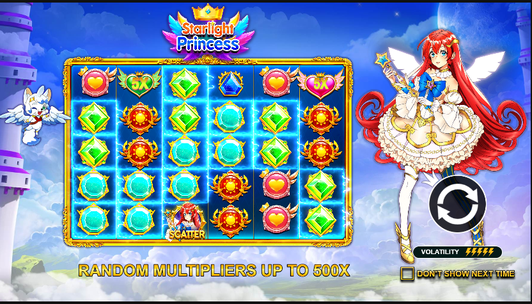
Starlight Princess 1000 Slot Demo: Switching to a Real Account
Switching to a real account must be a conscious choice, not a slide. Imagine you liked the trial and you just want to “see”. You deposit, you play, then you find yourself extending because you had no plan. The difference between “seeing” and “getting carried away” is preparation.
Start by checking your account: complete information, activated limit settings, and access to localized support. Only then choose your payment method. A useful rule: one method per session, to keep the history readable. Finally, make a single deposit, aligned with your closed budget.
The real account is not a “truer” version of the game, it’s a version where your emotions cost. If you play when you are stressed, the session becomes expensive. If you play when you are calm, with a planned exit, the session remains entertainment.
Single Deposit and Concrete Session Plan
Imagine you lose a little, then add “just a little more.” That’s how the budget disappears. A single deposit forces clarity: you know what you’ve decided, and you no longer have to negotiate.
Before starting the session, write the rule in your head: “budget X, duration Y, three blocks, break between blocks.” It’s simple, but it works because it’s precise. And if you don’t feel able to follow this rule today, it’s a signal: it’s better not to deposit.
Withdrawal And Waiting: Don't Play To Wait
Imagine you request a withdrawal and keep refreshing the screen. The tension rises, and you tell yourself, “I’ll play again while I wait.” It’s a trap. Waiting should be managed outside the session, not during it.
Choose a consultation rhythm: one check, then you do something else. If a step is requested on your profile, you do it calmly. If you have a question, you contact support with facts and a single question. The more precise you are, the more likely the answer is to be useful.
Payments In France: Habits That Avoid Surprises
Payments become simple when you impose a routine. Imagine you make several small transactions in the same evening, then you no longer know which one corresponds to what. Your history becomes blurry, and so does your mind. A single rule corrects this: one deposit per session, then a check of the history only once.
Choose a payment method that you understand and can track. Traceability is more important than speed. After a deposit, check that the transaction appears, then stop looking. Constantly monitoring yourself creates anxiety, and anxiety leads to quick decisions.
If a status seems slow, don't “fix” it with an additional action. Imagine you repeat an operation “to test” and create a duplicate. Routine helps avoid these reflexes. You check, you wait, and if necessary, you contact support.
Subject | Good Habit | Why It Helps | To Avoid |
Deposit | Only one per session | Clear budget, less impulse | Add “just a little” |
Payment Method | One method per session | Readable history | Change midway |
Tracking | Check once | Less anxiety | Refresh in a loop |
Withdrawal | Calm request | Fewer errors | Launch after a tense session |
Support | Unique question, facts | More precise answer | Long and vague messages |
Control | Active breaks and limits | Controlled session | Playing to compensate |
Secure the Steps Without Slowing Down the Fun
A routine doesn't take away the fun, it takes away the noise. Imagine you know exactly where to look and what to do. You're not improvising, so you enjoy it more. Pleasure often comes from fluidity, not haste.
Focus on three points: own account, accessible history, identified support. Once these points are in place, the rest is simpler. And if you see that you are “tinkering” during a session, it’s a signal: pause, then decide.
Assistance and Security: Play with Calm
Security is an everyday thing, not an option. Imagine you're playing on a shared device and you forget to log out. Even if nothing happens, you're left with unnecessary worry. Unique password, locked device, and systematic logout - these actions prevent problems.
Support, on the other hand, works better when you're organized. Imagine you write "it's not working." You'll often get a generic response. If you write "I did X, I see Y, I want to know Z," you save time. One question per message, facts, and no parallel changes while waiting.
In France, within the framework of applicable rules and reserved for adults, the best responsible gaming reflex remains the same: if you play to relieve tension, you stop. Gaming must remain entertainment. Pause and self-exclusion tools exist for moments when the decision becomes difficult.
When to Contact Support Without Getting Scattered
Imagine you have a doubt about a move and you start clicking everywhere. You create more confusion. Instead, stabilize: you note what you see, you check the history, then you ask a precise question.
Provide useful information: the step you were on, the approximate time, and the message displayed. Then, wait for the answer without multiplying actions. This discipline reduces stress and avoids turning a small problem into an emotional session.
FAQ
How to test the game in free version without getting lost?
Start with a test objective, not a long session. Imagine you only want to check readability and rhythm: you do a first short block to locate the buttons, then a second block to observe your feelings, with a break in between. Keep a stable stake, reduce speed if you get tired, and voluntarily end even if everything is going well. A good test leaves you with a clear impression, not a desire to prolong.
What settings to make before switching to real money?
First, set a fixed budget and a maximum duration with an external timer, then activate the available pause and limit tools. Imagine you start a session "just to see" without rules: you extend and negotiate. With limits already in place, you no longer have to negotiate. Also check where the history and support are, as these are the two menus that reduce errors and stress.
How to avoid impulsive decisions on mobile?
Cut out distractions and shorten the session. Imagine you're playing on the couch, notifications active, and your clicks speed up: that's autopilot. Put it on silent mode, play in small blocks, impose a break, and keep a stable base stake. If you feel the urge to increase "to go faster," it's a signal to stop or take a break, not to restart.
What to do if I want to extend after my timer?
Treat this desire as an alarm. Imagine you tell yourself "five more minutes" and you repeat it: your rule becomes decorative. A rule only protects if it is non-negotiable. Finish cleanly, log out, then decide later, calmly, if you want to play again. This separation avoids sessions that get out of hand on a simple reflex.
How to keep a readable payment history?
Adopt a routine: one deposit per session, one payment method per session, and a single check of the history after the operation. Imagine you make several small additions: you no longer know what corresponds to what, and you get tense. With a simple routine, your history remains clear and you avoid repeated actions "to check," which fuel anxiety.
How to react if a withdrawal seems slow?
Don't turn waiting into a session. Imagine you're constantly refreshing the screen, then playing again "while waiting": you're spending without a plan. Choose a consultation rhythm, check your profile if a step is required, then contact support with facts and a single question if necessary. Waiting calmly always costs less than waiting while playing.
What habits make the experience more responsible?
Winning habits are simple: fixed budget, defined duration, breaks, and the ability to quit without negotiating. Imagine you're playing to compensate for a bad day: your decision is already biased. In this case, the best action is to take a break or stop the session. Using available control tools and keeping the game as adult entertainment, within applicable rules, protects your time, money, and peace of mind.